Claire Coffey, PhD

Researcher & consultant · Responsible AI for health

I use machine learning and data science to improve the fairness and real-world impact of predictive models, particularly in preventive health.

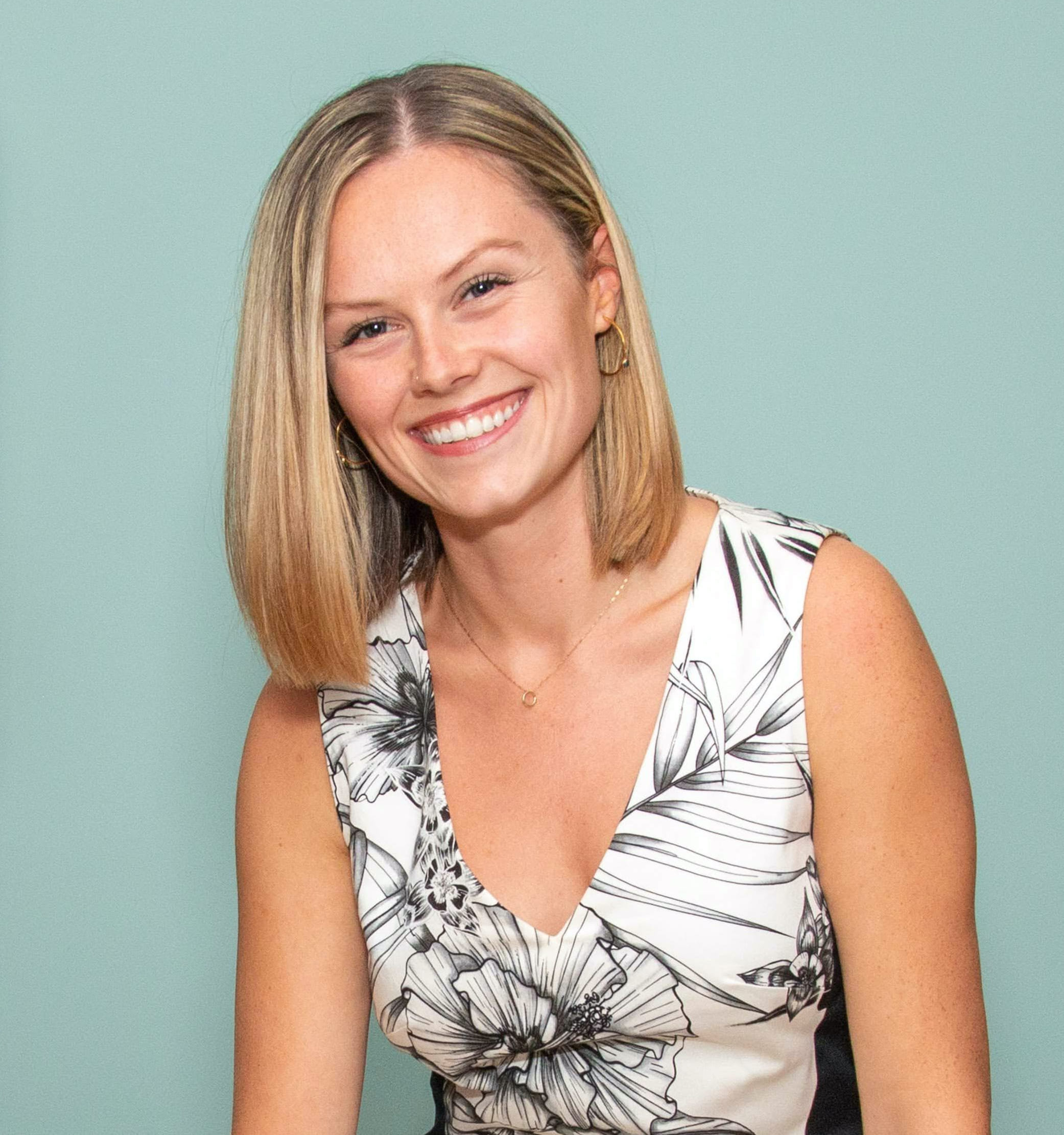
Portrait

What I do

01

Responsible & explainable AI for health

Evaluation for trust in real settings: interpretability, robustness, and fairness across groups.

02

Clinical prediction & preventive health modelling

Risk prediction using clinical and population data, with validation designed for real-world use.

03

Reproducible ML pipelines

End-to-end, reusable modelling workflows that make analyses easier to audit, maintain, and extend.

About me

I am a researcher and consultant specialising in responsible AI for health. My work uses machine learning and clinical data science to improve the fairness and real-world impact of predictive models, particularly in preventive health. I hold a Visiting Researcher position at the University of Cambridge.

I completed a PhD in Health Data Science at the University of Cambridge, supported by a studentship from Health Data Research UK, The Alan Turing Institute, and the Wellcome Trust. My doctoral research examined fairness in clinical prediction algorithms and polygenic risk scores. Following this, I was a research scientist at Helmholtz Munich, where I developed an explainable machine learning framework for environmental health and a reproducible population-data modelling pipeline.

Earlier in my career, I worked in AI R&D at a startup designing multi-objective optimisation algorithms for autonomous vehicles and earned two patents. I also hold an MPhil in Advanced Computer Science (DeepMind Scholar) from the University of Cambridge and a BSc in Computer Science from the University of Birmingham, including visiting placements at the Universities of British Columbia and Waterloo.

Selected highlights

Pitch prize · ai@cam Sciencepreneurship (2026)

Won a pitch prize for a preventive health AI concept focused on making prevention more personalised and scalable.

Info

Paper · European Heart Journal (2025)

Co-author on work combining clinical, metabolomic, and polygenic scores for cardiovascular risk prediction.

Read

Talk · Data Science for Health Equity (2025)

Invited seminar on whether polygenic risk scores are fair for cardiovascular risk prediction.

Watch

More

Recent milestones and updates.

  • Won a pitch prize at ai@cam Sciencepreneurship for a preventive health pitch (making prevention more personalised and scalable).
    Feb 2026 ai@cam
  • Delivered seminar: “Are polygenic risk scores fair for cardiovascular disease risk prediction?” (Data Science for Health Equity).
  • Paper published: “Combined clinical, metabolomic, and polygenic scores for cardiovascular risk prediction” (European Heart Journal).
    Dec 2025 Paper
  • PhD graduation ceremony (University of Cambridge).
    Oct 2025 Update
  • Preprint released: “Current polygenic risk scores are unlikely to exacerbate unfairness in cardiovascular disease risk prediction”.
    Sep 2025 Preprint
  • Submitted final hardbound PhD thesis copy (thesis available online).
    Aug 2025 Thesis
  • Presented poster: “AI-driven environmental epidemiology: a generalisable framework to predict cardiovascular health using fair and explainable machine learning” (Helmholtz AI).
    Jun 2025 Poster
  • Passed PhD viva with minor corrections.
    Mar 2025
  • Joined Helmholtz Munich as a Research Scientist (AI & Environmental Health).
    Feb 2025 Helmholtz
  • Submitted PhD thesis: “Evaluating and enhancing cardiovascular disease risk prediction using algorithmic fairness”.
    Dec 2024
  • PPIE report released: “Equitable, trustworthy and safe research in healthcare technology, data and artificial intelligence: an international dialogue”.
    Dec 2024 Report
  • Poster accepted for AMLD EPFL 2025: Algorithmic fairness in CVD risk prediction models.
    Dec 2024 AMLD

Selected papers, preprints, reports, and patents.

  • Current polygenic risk scores are unlikely to exacerbate unfairness in cardiovascular disease risk prediction.
    medRxiv preprint · 2025 Preprint
  • Combined clinical, metabolomic, and polygenic scores for cardiovascular risk prediction.
    European Heart Journal · 2025 Paper
  • Axes of prognosis: Identifying subtypes of COVID-19 Outcomes.
    AMIA Annual Symposium · 2021 Paper Recording
  • Achieving Net Zero within the NHS: System-wide transition to greener, sustainable care.
    Commissioned report (Cambridge ThinkLab / Apollo) · 2022 ThinkLab Report
  • Vehicle Route Guidance.
  • Target Speed Optimisation.
    GB patent · 2018 Patent IPO

Invited seminars and conference talks.

  • Data Science for Health Equity Seminar: Are polygenic risk scores fair for cardiovascular disease risk prediction?
  • Helmholtz Munich Seminar: Improving Cardiovascular Disease Prediction: From Fair Algorithms to Environmental Insights.
  • International Day of Women in Statistics and Data Science (IDWSDS) Conference: Data Science for Health Equity: Algorithmic Fairness in Cardiovascular Disease Risk Prediction.
  • ECML PKDD: Understanding and Improving Algorithmic Fairness in Cardiovascular Disease Risk Prediction.
  • HDR UK Cambridge Community Meeting: Understanding and Improving Fairness in Medical Risk Prediction.
  • HDR UK Doctoral Immersion Week on Fairness in healthcare data modelling: Algorithmic fairness in cardiovascular disease risk prediction.
  • AMIA Annual Symposium: Axes of prognosis: Identifying subtypes of COVID-19 Outcomes.
  • HDR UK Bimonthly Webinar: Running and completing a PhD in the time of COVID (with Peter Diggle).
  • UCL MedTech Conference: Sharing my experiences in MedTech.

I’m keen to do more science communication work — public engagement is a core part of doing useful research.

  • Artificial Intelligence: Theory, Responsibility, and Sustainability (co-designed and delivered).
    2023
  • MPhil Population Health Sciences — Teaching assistant (Advanced Statistics for Epidemiology).
    2023
  • High school Computer Science — GCSE/A-Level tutoring and in-school teaching (years 7–13).
    2017–2022
  • Statistical Methods for Health Equity organiser (seminars, reading group, research; yearly symposium).
  • Journal manuscript reviewer (collaborative lab reviews).
    Science · European Heart Journal
  • Reinforcement learning for healthcare (offline RL; multimorbidity trajectory modelling).
    Supervised by Chris Yau Chris Yau
  • Fairness and the bias–variance trade-off (MPhil thesis; criminal recidivism data).
    Supervised by Neil Lawrence Neil Lawrence
  • Multi-objective journey optimisation (BSc thesis; autonomous vehicles).
    Supervised by Dave Parker Dave Parker
  • Risk communication: evaluating tools for presenting disease risk to patients.
    Project led by Owen Taylor Project Owen Taylor

Get in touch

Open to collaborations, advisory, and short, high-impact consulting.

clairecoffey@live.co.uk